How to Choose Individually Packaged Cotton Swabs
Choosing an Individual-Packaged Cotton Swab seems simple until small quality differences affect safety, comfort, and consistency. A sealed wrapper may look reassuring, but appearance cannot confirm cleanliness, fiber security, or manufacturing control. The better choice begins with the intended application.
Dr. Kelly Reynolds, a public-health microbiologist, has stated, “Clean-looking is not the same as contamination-free.” That reminder matters when comparing swabs for first-aid kits, clinics, cosmetics, travel, or personal care. Check whether each Individual-Packaged Cotton Swab has clear labeling, intact packaging, a traceable lot number, and a stated expiration date when applicable. Do not assume “individually wrapped” automatically means sterile. Sterility must be specifically claimed and supported by appropriate validation.
Material selection also deserves attention. Cotton should remain attached during ordinary use, while the handle should resist bending without feeling unnecessarily rigid. Excess lint can be inconvenient, especially around delicate surfaces. Packaging should open smoothly, yet remain sealed during storage and transport. A torn edge, loose wrapper, or damp carton is a practical warning sign.
Manufacturing credentials provide another layer of confidence. Look for documented quality systems, consistent inspection procedures, and transparent product information. Certifications can help, but they should not replace careful evaluation. That is an easy mistake.
There is no perfect swab for every situation. A product suitable for routine personal care may not meet clinical requirements. This guide examines the details that buyers often overlook, helping them compare Individual-Packaged Cotton Swab products with more confidence, patience, and realistic expectations. Even experienced purchasers can miss one small detail. That is worth remembering.
What Individually Packaged Cotton Swabs Are
How to Choose Individually Packaged Cotton Swabs
What Individually Packaged Cotton Swabs Are
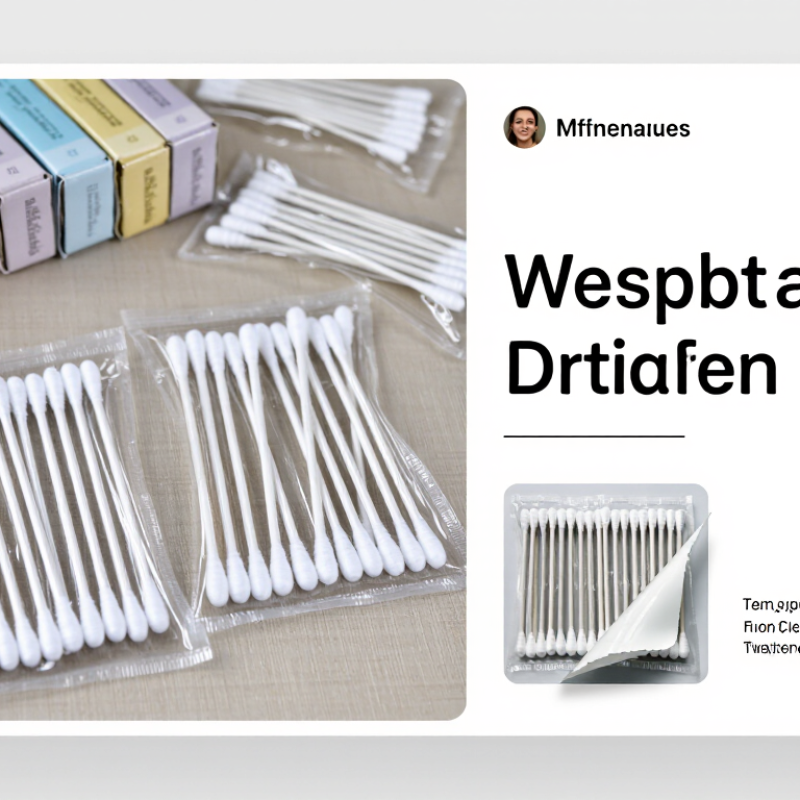
Individually packaged cotton swabs are single-use applicators sealed one at a time. They usually have a cotton, rayon, or blended tip fixed to a paper or plastic stem. The wrapper helps protect each swab from handling, dust, and moisture before opening. However, packaged does not always mean sterile. That distinction matters. Sterility depends on the manufacturing process and product labeling, not appearance alone. For wound care, select swabs clearly labeled for that intended use.
When choosing them, inspect the wrapper first. It should be fully sealed, dry, and free from tears. A clear production date or lot number can support better quality control. Check the tip as well. It should feel secure, evenly shaped, and free from loose fibers. A thin tip may suit makeup details, while a fuller tip can absorb more liquid. Yet, larger does not automatically mean better. The right shape depends on the task.
A practical check is simple. Open one swab and gently roll it between clean fingers. If the cotton sheds quickly, the construction may be weak. Some packaging feels reassuring but hides poor absorption. That is easy to overlook. Never push a swab deep into the ear canal or use it near sensitive areas unless the instructions permit it. Even careful choices have limits, and individually sealed packaging cannot replace proper handling.
How to Choose Individually Packaged Cotton Swabs
Individually packaged cotton swabs are single-use applicators sealed in separate pouches. The most suitable size depends on access, precision, and the amount of surface area that needs to be cleaned or sampled.
The dimensions shown are representative sizes commonly specified for individually packaged cotton swabs; exact specifications vary by application and supplier.
Key Features to Evaluate Before Buying
How to Choose Individually Packaged Cotton Swabs
Key Features to Evaluate Before Buying
Individually packaged cotton swabs should protect each tip from dust, moisture, and handling. Examine the wrapper closely. It should be sealed on every edge, without gaps, loose film, or punctures. A clean tear notch also matters when gloves are worn. Small details can slow a busy clinic.
The World Health Organization reported in 2022 that about 7 in 100 patients in high-income acute-care facilities acquire at least one healthcare-associated infection. In lower- and middle-income countries, the estimate rises to 15 in 100. This does not make every swab a medical device, but it shows why contamination control deserves attention. Choose packaging that states whether the swab is sterile or non-sterile. Do not assume “individually wrapped” means sterile.
Material quality needs equal care. Look for tightly bonded cotton that leaves minimal lint during wiping. A firm paper, bamboo, or plastic shaft should resist bending without sharp edges. For sensitive skin, avoid added fragrance, dyes, or unnecessary lotions. Check the intended use, lot number, expiry date, storage conditions, and manufacturer contact details. The U.S. FDA emphasizes traceability and packaging integrity in its guidance for sterile products, making these details practical reliability checks.
There is room for doubt. A glossy wrapper can look impressive while sealing poorly. Inspect a sample before ordering cartons. Rub the tip on dark fabric. Loose fibers become obvious. The cheapest option may create more waste through breakage, rejected units, and repeated handling.
How to Choose the Right Swab Material and Tip Design
Choosing an individually packaged cotton swab starts with its material, not its wrapper. Cotton feels soft and absorbs well, but it can retain moisture and release fibers. Rayon usually offers faster liquid uptake and more uniform fibers. Polyester provides better strength and lower lint during controlled cleaning. My first choice is not always cotton.
Tip design changes handling.
A tightly wound cotton tip suits gentle wiping and sample collection. A dense, rounded tip feels stable against skin. A pointed tip reaches narrow grooves but may create excessive pressure. Foam tips produce low lint and even contact, although they may absorb less liquid. Check tip density, fiber shedding, shaft flexibility, and tip-to-shaft bonding. ISO 10993-1 recommends evaluating biological safety according to the product’s intended contact and duration.
Market evidence also matters. A 2024 Grand View Research report estimates the global cotton swabs market will continue growing through 2030, driven partly by personal care and healthcare demand. Smithers’ 2024 nonwovens outlook identifies hygiene and medical applications as major demand areas. These reports suggest consistency matters more than a “natural” label. That lesson is easy to miss. A swab can look premium yet shed fibers under light pressure. Test samples on dark glass, inspect the tip under magnification, and review lot-level quality records. Individually sealed packaging protects each unit, but it does not automatically prove sterility. Check the manufacturer’s validation, material declaration, and storage guidance before selecting the final design.
How to Check Packaging Safety and Hygiene Standards
How to Choose Individually Packaged Cotton Swabs
Individually packaged cotton swabs should have clean, intact wrapping. I check the seal before opening each packet. A loose edge, tear, moisture mark, or unusual odor is a warning sign. The package should identify the cotton material, handle material, manufacturer, batch number, and production date when available. Clear information supports traceability and responsible quality control.
A sealed packet does not automatically mean the swab is sterile. Look for a specific sterility statement and supporting quality information. Reliable suppliers should explain their testing methods, storage conditions, and applicable hygiene standards. Packaging should also protect the swab from dust, handling, and moisture during transport. I once assumed that shiny foil always meant better protection. That assumption was too simple. Seal quality matters more than appearance.
Tips: Press the packet gently. It should feel dry and sealed. Check several units, not only one. Compare printing, lot codes, and seal strength across the box. Do not use a swab if the wrapper is damaged or the cotton looks discolored. Keep unopened packets in a cool, dry place. Avoid storing them near sinks or open windows. If information is missing, ask the supplier for test records and packaging specifications. Some details may still be unclear, so careful verification remains necessary.
| Check Dimension | What to Verify | Acceptable Finding | Warning Sign | Suggested Assessment |
|---|---|---|---|---|
| Individual Seal Integrity | Inspect every pouch or wrapper for complete seals, punctures, tears, open edges, and delamination. | Seals are continuous, closed, dry, and free from visible damage. | Loose seams, pinholes, moisture, wrinkles across the seal, or any opened package. | Pass only when the package barrier is visibly intact. |
| Sterile or Non-Sterile Status | Check whether the product is explicitly labeled “sterile” or “non-sterile.” Do not assume that individual packaging means sterility. | The status is clearly stated and matches the intended application. | No sterility statement, unclear wording, or sterile claims without supporting information. | Treat unclear products as non-sterile. |
| Sterilization Information | For sterile products, look for the sterilization method, such as ethylene oxide or radiation, when required by the applicable market or product specification. | A defined sterilization method is provided and supported by batch documentation or a certificate of sterility. | “Sterile” appears without a method, lot traceability, or quality documentation. | Request objective evidence for sterile-use applications. |
| Material Identification | Review the stated swab head material, stick material, coatings, and any additives or processing chemicals. | Materials are clearly declared and suitable for the intended contact or cleaning purpose. | Undeclared fibers, strong chemical odor, visible discoloration, or material information that cannot be verified. | Confirm material suitability before use on skin, wounds, devices, or laboratory surfaces. |
| Cleanliness and Foreign Matter | Open a representative sample in a clean area and inspect the cotton head and stick for dust, hair, loose fibers, stains, and particles. | The swab is visibly clean, dry, uniform, and free from foreign matter. | Black or colored particles, oily marks, unusual odor, excessive lint, or damaged cotton. | Reject visibly contaminated or damaged units. |
| Lot or Batch Traceability | Check for a lot, batch, or production code that links the individual or outer package to quality records. | The code is legible, durable, and recorded with the purchase or receiving documentation. | Missing, unreadable, inconsistent, or easily rubbed-off identification. | Require traceability for controlled or professional use. |
| Expiry or Use-by Date | For sterile or regulated products, check the use-by date and confirm that it is legible and linked to the relevant lot. | The date is present where applicable, unexpired, and printed in an unambiguous format. | Expired product, missing date where required, or a date that cannot be read. | Do not use expired sterile products. |
| Label Clarity and Intended Use | Review intended use, warnings, directions, storage conditions, quantity, and disposal instructions. | Information is complete, readable, consistent, and appropriate for the intended application. | Vague claims, missing warnings, contradictory instructions, or labels printed only in an unfamiliar language. | Choose products with instructions users can understand. |
| Packaging Material Suitability | Assess whether the wrapper provides a suitable barrier against moisture, dust, and handling damage during the stated shelf life. | The wrapper is compatible with the product, sealed consistently, and remains intact after normal handling. | Paper or film is brittle, damp, easily torn, or unsuitable for the claimed storage period. | Evaluate packaging performance, not just appearance. |
| Storage and Transport Conditions | Check storage instructions and inspect shipping cartons for water damage, crushing, excessive heat exposure, or contamination. | Products are dry, clean, protected from direct sunlight, and stored within the stated conditions. | Wet cartons, compressed packages, pest evidence, or prolonged exposure to unsuitable conditions. | Quarantine damaged shipments until evaluated. |
| Quality-System Evidence | Where relevant, request specifications, inspection records, certificates, and evidence of a documented quality system. | Documents identify the product type, lot, applicable tests, acceptance criteria, and release status. | Generic certificates unrelated to the product or documents that cannot be matched to the lot. | Match documents to the exact product and batch. |
| Applicable Standards and Regulations | Determine whether standards such as ISO 11607, ISO 11135, ISO 11137, ISO 10993, or relevant national regulations apply to the product’s intended use. | Claims are supported by the applicable standard, test report, declaration, or regulatory documentation. | Standards are listed without scope, edition, test evidence, or connection to the actual product. | Verify applicability; standards are not automatically required for every cotton swab. |
How to Compare Quality, Quantity, and Overall Value
When comparing individually packaged cotton swabs, start with quality evidence, not pack size. Check whether the cotton is medical-grade, low-lint, and firmly bonded to the shaft. A loose tip is a small defect, but it can leave fibers on skin or equipment. Ask for batch records covering tip shedding, shaft strength, cleanliness, and microbial testing where applicable. ISO 2859-1 provides a recognized framework for sampling inspection, while ISO 10993-1 helps assess biological safety for products used as medical devices. These standards do not automatically certify every cotton swab. The intended use still matters.
Quantity can distort value. A box of 500 individually sealed swabs may cost less per unit than a box of 200, yet oversized packaging or poor usability can create waste. The OECD Global Plastics Outlook reports that plastic waste more than doubled from 2000 to 2019, while only 9% was recycled. Packaging deserves attention. Compare pouch material, seal consistency, opening ease, and disposal requirements. Also calculate the delivered cost per usable swab, including damaged units and shipping. A larger count is not always better. That assumption can fail.
Professional buyers should request production dates, shelf-life information, certificate details, and representative samples. Open several packs, not just one. Look for dry, clean cotton, centered tips, and shafts that do not bend during normal handling. Grand View Research identifies hygiene, healthcare, and personal-care applications as key demand areas in its Cotton Swabs Market Analysis, 2024. Still, market growth does not prove quality. I would record test results in a simple comparison sheet, because memory is unreliable and attractive pricing can hide inconsistent batches.